
India–EU FTA Deal 2026
Why the India–EU FTA Is a Big Deal
Trade agreements often sound boring, technical, and distant from daily business realities.
But the India–EU Free Trade Agreement (FTA) is different.
This deal has the potential to reshape how Indian businesses sell to Europe, how European companies invest in India, and how global supply chains evolve over the next decade.
If you are an entrepreneur, exporter, sales leader, or professional working with global clients, this deal directly impacts you, whether you realize it yet or not.
Let’s break it down in simple terms.
What Is the India–EU FTA?
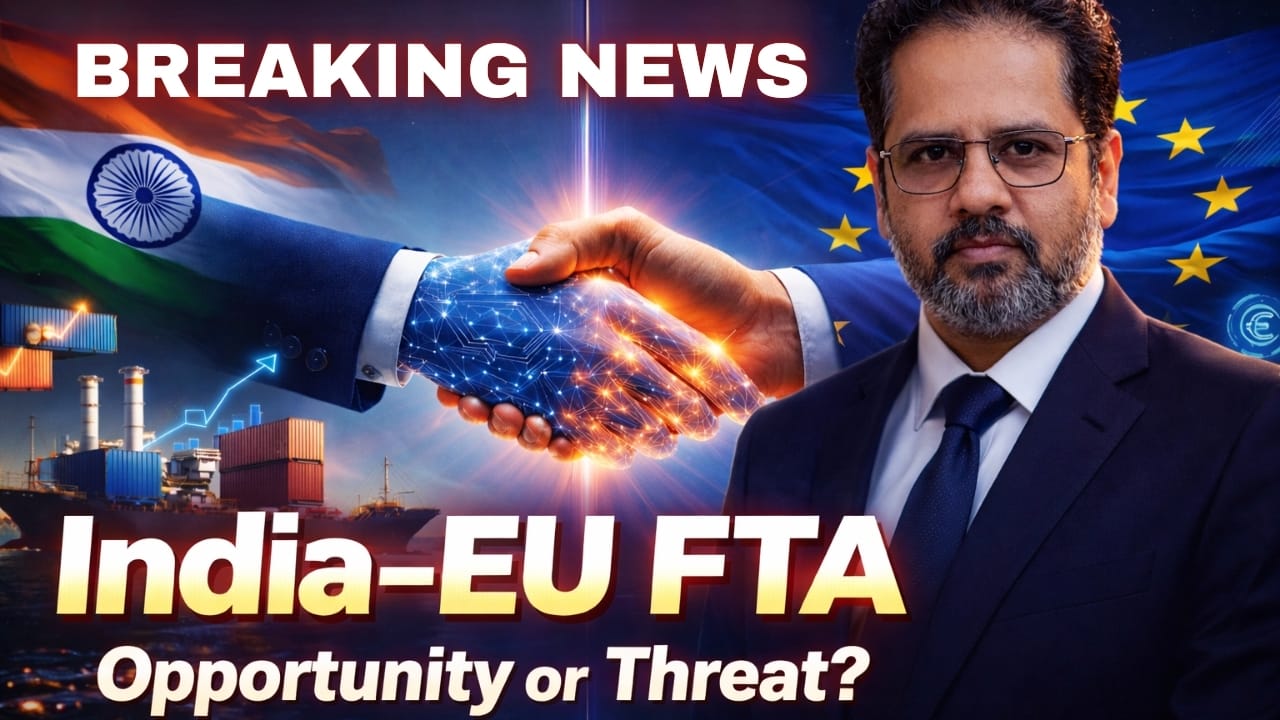
The India–EU FTA is a proposed comprehensive trade agreement between India and the European Union.
Its core objective is to reduce trade barriers, increase market access, and strengthen economic cooperation.
In simple language, it aims to make it easier, cheaper, and faster for Indian and European businesses to trade with each other.
The discussions around this deal have been ongoing for years, paused, and then revived because both sides now see strategic value in deeper economic ties.
Why India and the EU Need Each Other Now
India’s Perspective
India wants to:
Increase exports beyond traditional markets
Attract high-quality foreign investment
Move up the global value chain
Reduce dependency on a few trading partners
Europe is one of the world’s largest and most stable consumer markets. Access to it means scale, credibility, and long-term demand.
EU’s Perspective
The EU wants to:
Diversify supply chains
Reduce over-dependence on China
Access India’s fast-growing consumer market
Partner with a democratic, stable economy
India offers scale, talent, manufacturing capability, and long-term growth potential.
This is not just a trade deal. It is a strategic alignment.
Key Areas Covered Under the India–EU FTA
Although negotiations are complex, the agreement broadly focuses on the following areas:
1. Goods and Manufacturing
This includes reduction or elimination of tariffs on:
Automobiles and auto components
Pharmaceuticals
Textiles and apparel
Engineering goods
Chemicals and machinery
For Indian manufacturers, this means better price competitiveness in Europe.
For European companies, it means easier entry into India’s vast market.
2. Services and Professional Mobility
This is a critical area for India.
India wants easier access for:
IT and technology services
Consulting and professional services
Skilled professionals and temporary movement
If negotiated well, this can open significant opportunities for Indian service providers and professionals working with European clients.
3. Investment and Market Access
The deal aims to:
Improve ease of doing business
Provide better protection for investors
Encourage long-term investments
European companies are known for high-quality, long-term investments rather than short-term speculation. That aligns well with India’s growth goals.
4. Standards, Compliance, and Sustainability
Europe has strict standards related to:
Environment
Data protection
Product quality
Labor practices
While this creates challenges for Indian exporters, it also forces an upgrade in quality and processes. In the long run, this improves global competitiveness.
What Are the Benefits for India?
1. Boost to Exports
Lower tariffs make Indian products more attractive in European markets.
This can significantly increase exports in sectors like textiles, pharma, and engineering goods.
2. Job Creation
Higher exports and foreign investment lead to:
More manufacturing activity
More services demand
More employment opportunities
3. Technology and Skill Transfer
European firms bring advanced technology, systems, and processes.
Indian companies gain exposure, partnerships, and capability building.
4. Global Credibility
A strong trade agreement with the EU signals that India is a serious, reliable global partner.
That boosts investor confidence worldwide.
What Are the Challenges and Concerns?
No trade deal is without trade-offs.
1. Pressure on Domestic Industries
Some Indian sectors may face intense competition from European companies.
Small businesses may struggle initially if not prepared.
2. Compliance Costs
Meeting EU standards requires:
Process upgrades
Certifications
Better documentation
This increases short-term costs for Indian exporters.
3. Negotiation Complexity
Issues like:
Data protection
Intellectual property
Agriculture
are sensitive and require careful balancing.
India must protect its domestic interests while staying globally competitive.
What This Means for Indian Businesses?
If you are an Indian business owner or sales professional, this deal is a wake-up call.
You must start thinking:
Are my products EU-compliant?
Do I understand European buyer mindset?
Is my sales approach aligned with European expectations?
Europe values logic, proof, documentation, and credibility.
Selling to Europe is less about persuasion and more about preparation.
What This Means for Sales and Business Professionals?
This deal will increase cross-border selling.
That means more global conversations, more cultural complexity, and higher expectations.
Sales professionals who understand:
Regional buying behavior
Compliance-driven selling
Consultative communication
will have a massive advantage.
Those who rely on generic pitches will struggle.
The Bigger Picture: Beyond Trade Numbers
The India–EU FTA is not just about tariffs and exports.
It is about positioning India in a changing global order.
As supply chains shift and geopolitics evolve, partnerships based on trust, democracy, and long-term thinking will dominate.
India and the EU fit that narrative well.
Conclusion: Opportunity Favors the Prepared
The India–EU FTA will not benefit everyone equally.
It will reward those who prepare early.
Businesses that upgrade quality, compliance, and sales capability will win.
Professionals who build global mindset and skills will grow faster.
This deal is not about tomorrow.
It is about the next 10 to 20 years.
Your Next Step
If you want to succeed in global selling, understand international buyer psychology, and build world-class sales skills, start with my free guide:
👉 5 Secrets to Become a Top 1% Sales Professional
📲 Or message me directly on WhatsApp at +91 9348101001 if you want guidance on global sales readiness.

Hey.. I am Bharat Ogirala
Bharat Ogirala, a leading sales coach in India with 22+ years’ experience, has trained 15,000+ professionals, empowering them to excel in sales, leadership, and business growth.






JOIN MY MAILING LIST
The Sales Gurukul is a tech-enabled sales enablement platform founded by Bharat Ogirala. The platform focuses on building structured, system-led sales capability through digital learning paths, practical frameworks, and execution support for sales professionals and organizations.
Contact: +91 9348101001
The Sales Gurukul is a Government of India recognized MSME (Udyam Registered Enterprise).
Follow us on


© 2026 The Sales Gurukul. All rights reserved.